

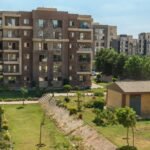





In April 2026, the old adage “Location, Location, Location” remains the ultimate truth of real estate, but the definition of a “prime location” has evolved. Beyond just the neighborhood name, property value today is driven by infrastructure certainty, climate resilience, and lifestyle efficiency.
🚆 1. The “Transit Premium” & Infrastructure Certainty
In 2026, buyers have become skeptical of “future” announcements. Proximity to operational or near-completion infrastructure now commands the highest premiums.
- The Transit Lift: Properties within 500–800 meters of a Light Rail Transit (LRT) or Metro station are seeing value increases of 4.4% to 8.3% globally.
- Certainty over Speculation: Locations where civic upgrades (upgraded sewage, stable electricity, and drainage) are already functional outperform “developing” areas by providing lower maintenance costs and higher habitability.
- Connectivity as a Baseline: While highways still matter, they are now an expectation. The real value is found in multimodal hubs that combine rail, bus, and e-bike infrastructure.
🛡️ 2. The “Climate Resilience” Discount & Premium
Climate risk is now a core component of property valuation. In 2026, “environmental infrastructure” is a non-negotiable factor for institutional and savvy private investors.
- The “Stranded Asset” Risk: Properties in high-risk flood zones or areas with poor heat mitigation are starting to see “brown discounts.” Banks are now doubling the weight of climate risk in lending decisions compared to 2024.
- Adaptation Value: Cities and neighborhoods that invest in flood defenses and water security are maintaining their value, while vulnerable areas face rising insurance premiums and falling liquidity.
- Energy Performance (EPC): In the UK and EU, properties with high energy ratings (EPC A or B) fetch a premium of roughly 3%, while those rated F or G see significant price reductions and legal rental restrictions.
🚶 3. The “Walkability” & Social Ecosystem
The “15-Minute City” concept has become a financial reality. Buyers are prioritizing “social infrastructure” over pure square footage.
- Social ROI: Proximity to top-tier schools, healthcare facilities, and daily retail (“Walkable Convenience”) creates sustained demand from end-users, shielding these locations from market volatility.
- Walkability Scores: High walkability (scores 80+) correlates with 35%–45% higher physical activity levels for residents and lower transportation costs (saving up to 17% of household income). This lifestyle efficiency is directly capitalized into the home’s resale value.
📊 2026 Location Value Matrix
| Feature | Impact on Value | 2026 Trend |
| Proximity to Transit | +5% to +15% | Shift toward operational rail over proposed roads. |
| School District | +10% to +25% | Consistently the strongest floor for resale value. |
| High Walkability | +10% to +20% | Driven by “lifestyle-first” young professionals. |
| Climate Risk (High) | -10% to -30% | Reflected in higher insurance and lower loan eligibility. |
| Digital Infrastructure | +5% | High-speed fiber/5G readiness is now a baseline need. |
🏗️ 4. Redevelopment vs. Outskirts
In mature urban areas, redevelopment zones are outperforming newer outskirts. These neighborhoods offer the “best of both worlds”: established social ecosystems (old trees, known schools) combined with modern safety, fire norms, and internal layouts. In 2026, these areas are considered “lower risk” and typically see stronger, steadier appreciation.
💡 The 2026 “Value Rule”
When evaluating a location today, look for “Functional Resilience.” A property in a neighborhood with a stable power grid, modern drainage, and walkable access to a grocery store will hold its value significantly better during economic or environmental shifts than a luxury standalone villa in an undeveloped area.